

The short answer: make a plan before every gathering. Decide what you’ll drink instead, have an exit plan and your own ride, line up one person you can text, and know what you’ll say when someone offers you a drink. If you slip, it’s not the end of your recovery. Get back to your plan the next day and reach out for support.
From Thanksgiving through New Year’s, and at birthdays, weddings, cookouts and work parties the rest of the year, alcohol is everywhere. Family stress, old routines and “just one” can make these days some of the hardest of the year. With some preparation, they can also become some of the best days of your recovery.
Before the event: make a plan
- Decide what you’ll drink. Bring your own: sparkling water with lime, a non-alcoholic beer or spirit (if those don’t trigger you), kombucha or a favorite soda. Having a drink in your hand stops most offers before they start.
- Drive yourself or arrange your own ride. You can leave the moment you want to.
- Set a time limit. Arrive a little late, leave a little early. An hour or two is a win.
- Pick a support person. Tell one friend, sponsor or family member your plan, and agree that you can text them during the event.
- Book support around the day. Schedule a meeting, a counseling session or a walk with a sober friend for the day of and the day after. Online AA and NA meetings run all day, including holidays.
- Eat first. Being hungry, angry, lonely or tired (HALT) makes cravings stronger. Eat, rest and check in with yourself before you go.
What to say when someone offers you a drink
You don’t owe anyone an explanation. A short, friendly answer works best, and you can repeat it as often as you need to:
- “No thanks, I’m good with this.”
- “I’m driving.”
- “I’m taking a break from drinking.”
- “I feel better when I don’t drink.”
- “Not tonight, but I’d love a [soda / coffee / mocktail].”
If someone keeps pushing, that’s about them, not you. Change the subject, find another part of the room, or use your exit plan.
At the event
- Stay near supportive people and away from the bar or the cooler.
- Give yourself a job: help in the kitchen, play with the kids, take photos, walk the dog. Staying busy makes time pass and keeps you out of drinking circles.
- Check in with yourself every hour. If cravings are rising or you feel overwhelmed, step outside, text your support person, or leave. Leaving early is a success, not a failure.
- Watch for “just one” thinking. Cravings usually peak and pass within 15 to 30 minutes. Ride the wave: breathe, move, drink some water, and wait it out.
Handling family stress and old triggers
Family gatherings can bring back old roles, old arguments and old reasons for drinking or using. It helps to decide ahead of time which topics you won’t discuss, which people you’ll limit time with, and when you’ll take a break. It’s okay to skip an event, host your own sober gathering, or celebrate on a different day. Protecting your recovery protects your relationships too.
If the holidays feel lonely
For many people the hardest part isn’t the parties, it’s being alone. Plan something for each day off: a meeting, a call with a friend, volunteering, a movie, a long walk. Online recovery meetings and the Affect app’s community are there on holidays, late at night and early in the morning, so you don’t have to get through it by yourself.
The rest of the year: birthdays, weddings and work events
The same plan works for every celebration. For a birthday, ask for a sober celebration: dinner, a game night, a hike. At a wedding, choose your drink before the toast and sit near people who support you. For the 4th of July and summer cookouts, bring a cooler of your own drinks and plan an activity. At New Year’s Eve, consider a sober event or an early night and a fresh start in the morning. For work events, a club soda with lime looks like any other drink, and leaving after an hour is completely normal.
If you slip
A slip doesn’t erase your progress. Many people in long-term recovery have had setbacks along the way. Be honest with yourself and someone you trust, notice what led to it, and get back to your plan the next day. If you’re in Affect’s program, tell your care team: no one is discharged for relapsing, and they’ll help you adjust your plan.
A safety note about alcohol withdrawal
If you drink heavily every day, stopping suddenly can be dangerous. Alcohol withdrawal can cause shaking, sweating, anxiety and, in severe cases, seizures or hallucinations. Talk to a medical provider before you stop, and call 911 if you or someone else has a seizure, severe confusion or hallucinations. Learn more about alcohol use disorder and withdrawal.
How Affect can help this season
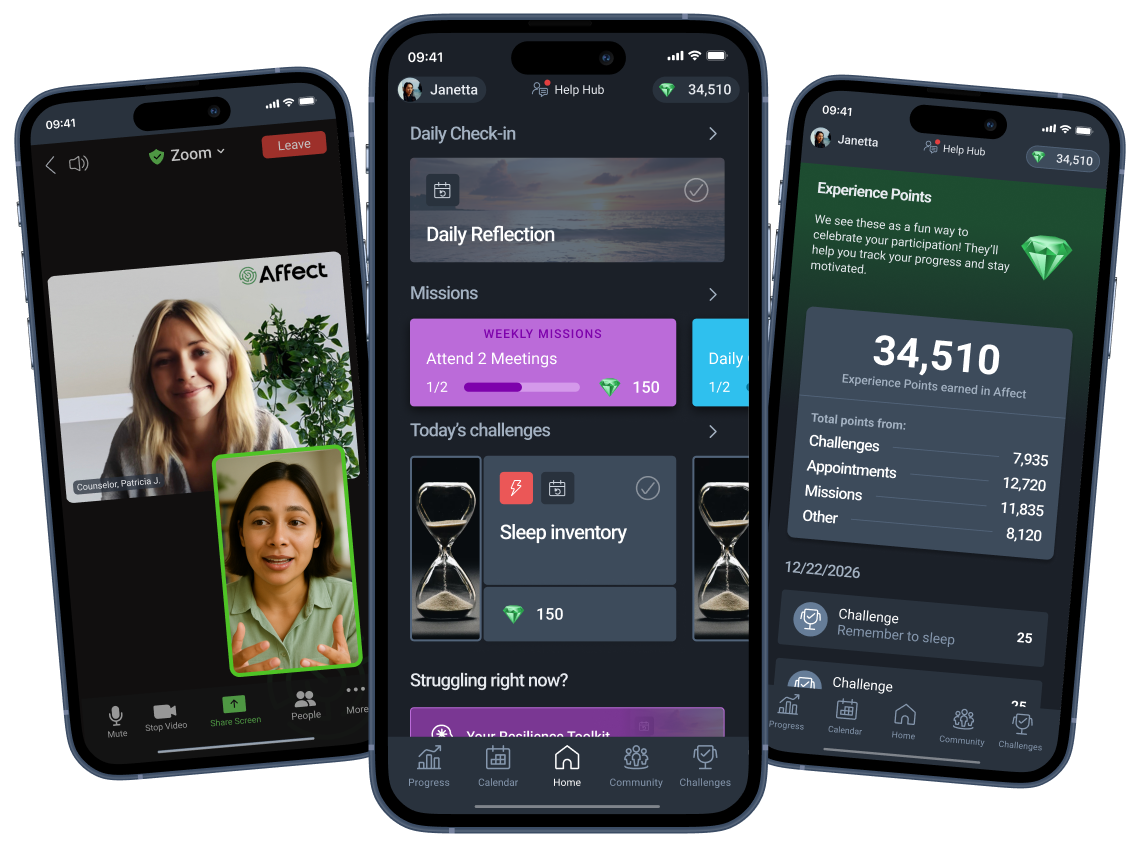
The Affect app has a free sober tracker, daily check-ins and a cravings toolkit you can use on your own. If you want more support, Affect’s treatment program gives you licensed counselors, medical providers who can prescribe medication for cravings and withdrawal, online groups and real rewards for progress, all from your phone. It’s covered by Medicaid and many insurance plans, and most members pay nothing out of pocket. Learn how Affect helps people stop drinking or see how the program works.
Download the app
Download the Affect app today from the Google Play Store or the Apple App Store to learn more and try it yourself for free.