

The short answer: Meth withdrawal usually starts within a day of last use. The “crash” (exhaustion, very long sleep, big appetite, low mood) is worst in the first few days. Most acute symptoms ease within 7 to 10 days, but cravings, depression and trouble concentrating can last for weeks. Withdrawal is rarely dangerous to your body, but the low mood can be serious, so support matters.
Think of it as your brain recalibrating after running on overdrive. It’s like a factory reset, minus the convenient button. Here’s what to expect and what actually helps.
Common symptoms
- Exhaustion and sleeping much more than usual (often followed by trouble sleeping later)
- Increased appetite
- Low mood, irritability and anxiety
- Strong cravings
- Trouble concentrating and remembering
- Feeling flat, with little pleasure in things you usually enjoy
- In some people, paranoia or seeing and hearing things that aren’t there, especially after heavy use
Timeline
Exhaustion, long sleep, hunger and low mood. Many people barely leave bed.
Energy slowly returns. Cravings, irritability, anxiety and mood swings peak for many people. Most acute symptoms ease by the end of this stretch.
Cravings come in waves, often triggered by people, places and stress. Sleep and concentration improve unevenly.
Some people have lingering low mood, cravings or trouble feeling pleasure for months. This gets better with time and treatment.
Everyone’s timeline is different. Heavier, longer use, other substances and mental health conditions can all make it longer.
What helps
- Sleep and food. Let yourself rest and eat regular meals. Your body is catching up.
- Structure. Short, simple daily plans beat long, ambitious ones. A walk counts.
- Contingency management. This means earning small, real rewards for negative drug tests and other goals. According to SAMHSA, it’s the treatment with the strongest evidence for stimulant use disorders (SAMHSA TIP 33). Read how contingency management works.
- Counseling. Cognitive behavioral therapy helps you plan for triggers and cravings.
- People. Tell someone you trust what you’re doing. Cravings shrink when they’re said out loud.
Are there medications for meth withdrawal?
There’s no FDA-approved medication for methamphetamine use disorder yet. In a large NIH-funded trial, a combination of injectable naltrexone and the antidepressant bupropion helped more people reduce their meth use than placebo did (New England Journal of Medicine, 2021; NIDA). Prescribers may also treat specific symptoms like sleep problems, anxiety or depression. Ask your prescriber what makes sense for you. See medications for alcohol and stimulant use disorders.
When to get urgent help
- Call or text 988 if you have thoughts of suicide or harming yourself. Depression in meth withdrawal can be severe, and it’s not a sign of weakness.
- Call 911 for chest pain, a seizure, severe confusion, or if you or someone else may be a danger to themselves or others.
- Keep naloxone nearby. Some meth is now mixed with fentanyl, so overdose is a real risk even if you don’t use opioids. See fentanyl and meth: what you need to know.

How Affect helps
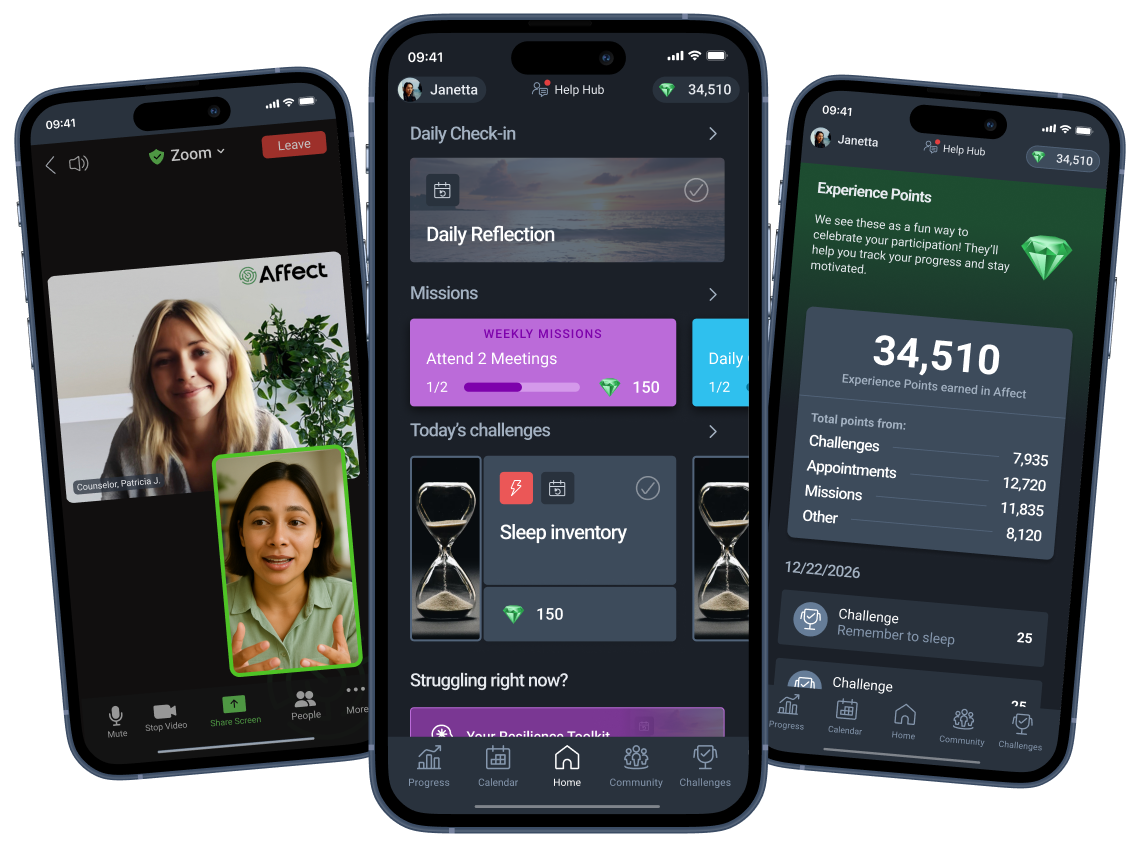
Affect’s program for stimulants combines contingency management rewards, counseling, groups and medical care, all from your phone. Affect is covered by Medicaid and most insurance plans. Read how to stop using meth or start online stimulant treatment.
FAQ
Can you detox from meth at home?
Many people can, with support, because meth withdrawal is rarely physically dangerous. Get medical help if you have severe depression, suicidal thoughts, psychosis, or other health conditions, or if you also use alcohol or benzodiazepines.
How long do meth cravings last?
Cravings are often strongest in the first few weeks and come in waves after that. They usually become less frequent and less intense over months, especially with treatment.
Why do I sleep so much after quitting meth?
Your body and brain are recovering from running without enough rest. Long sleep in the first days is a normal part of the crash.
Is it normal to feel depressed after quitting meth?
Yes, it’s common. It usually improves over weeks. If it’s severe or you have thoughts of suicide, call or text 988 and tell your care team.
What’s the best treatment for meth addiction?
Contingency management has the strongest evidence, usually combined with counseling. Some medications show promise, and treating co-occurring depression or anxiety helps too.
Sources
- SAMHSA, TIP 33: Treatment for Stimulant Use Disorders (updated 2021)
- Trivedi MH et al., Bupropion and Naltrexone in Methamphetamine Use Disorder, New England Journal of Medicine (2021)
- Li MJ, Shoptaw SJ, Clinical Management of Psychostimulant Withdrawal: Review of the Evidence, Addiction (2023)
- NIDA, Methamphetamine Research Report
- 988 Suicide & Crisis Lifeline, 988lifeline.org
Download the app
Download the Affect app today from the Google Play Store or the Apple App Store to learn more and try it yourself for free.